Did the last hailstorm leave your siding looking a little rough? If you need hail damage siding repair in Fort Collins, you’re in good company. Our area sits in what many people call Hail Alley.
Colorado’s hail season runs from mid-April through September, and it peaks from May through July. The National Weather Service calls hail an inch across or bigger “severe.” Even stones about three-quarters of an inch wide, roughly the size of a penny, can mark vinyl.
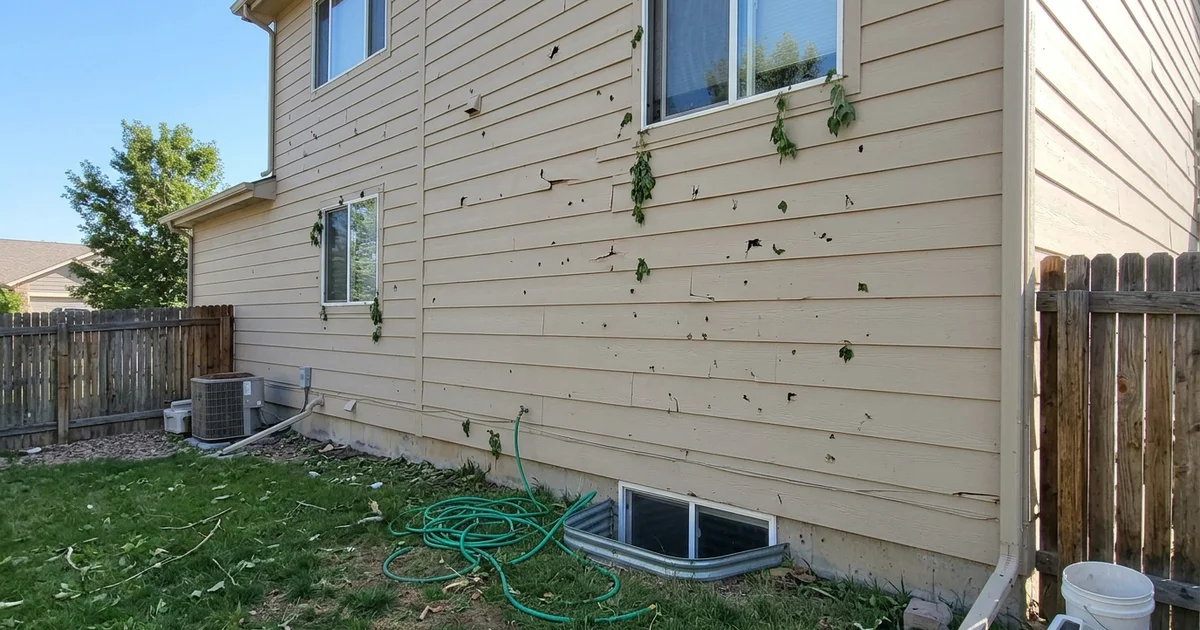
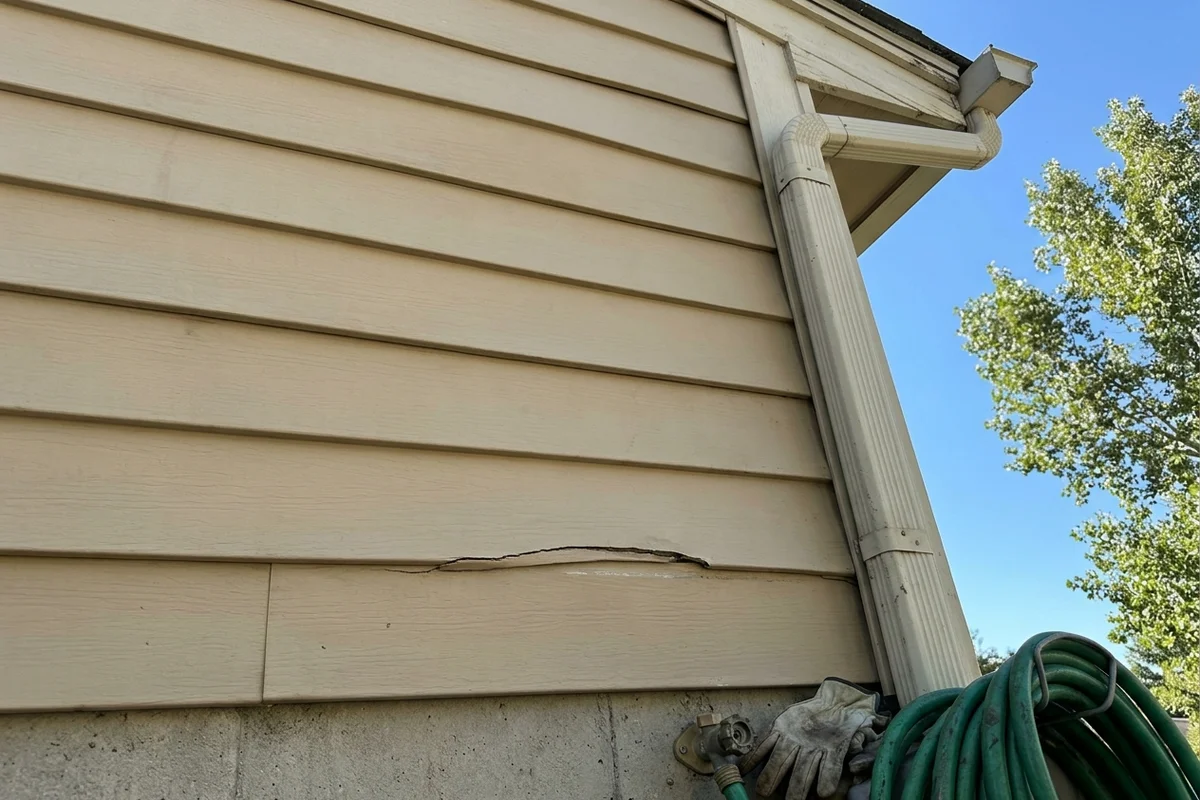
What does hail do to siding?
Hail hits each siding material a little differently:
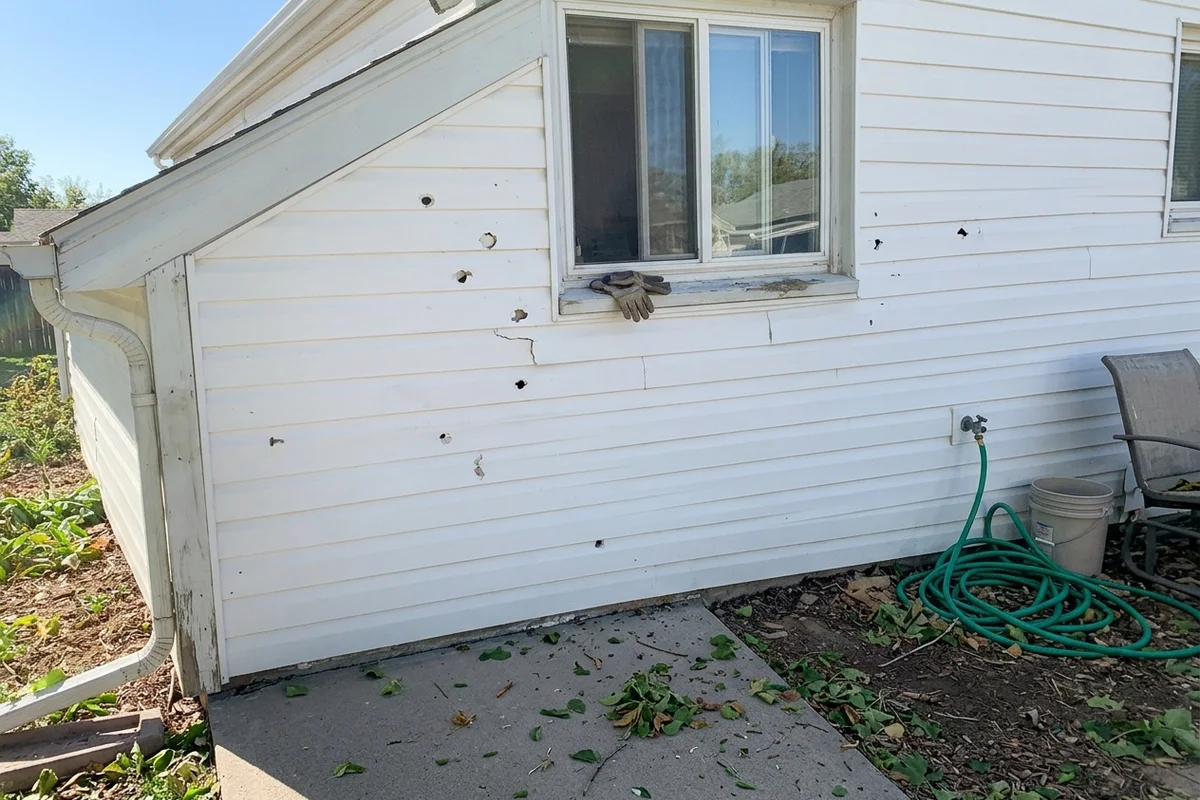
- Vinyl: Cracks and small holes, especially when it’s cold and the panel is stiff.
- Aluminum and other metal: Dents that are easy to miss until the sun is low and throws a shadow across them.
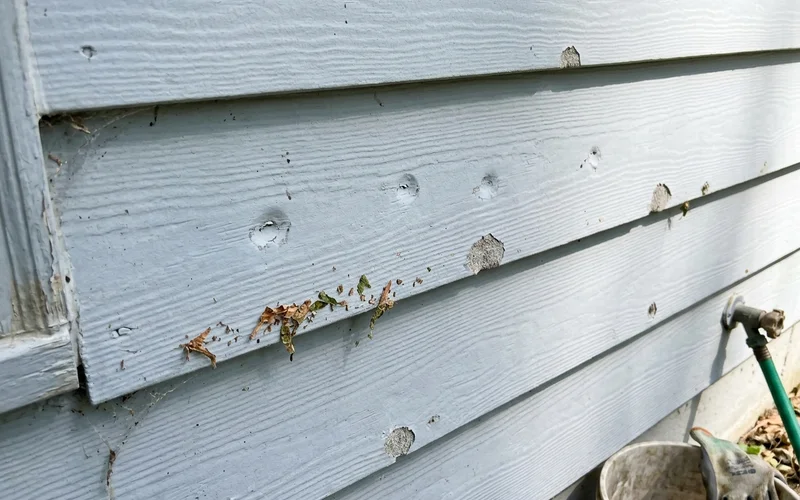
- Fiber cement: Chips at the face and corners, which leave the core open to water.
- Wood: Splits along the grain, or paint that flakes off where the stones hit.
The storm side takes most of the beating. Wind can still carry hail around corners and onto the other walls, so we check every wall, not just the one facing the storm.
The guide on how to spot hail damage on siding walks through what to look for by material.
How we look at a house after a hailstorm
We walk the house wall by wall. On each one, we note:
- Cracked and holed vinyl panels
- Dented aluminum
- Chipped fiber cement
- Split boards
Then we look at the things around the siding that tell the story of the storm. Window screens with tears or dents, downspouts with dimples, and painted trim with fresh marks all show which walls the hail reached.
Photos are part of every estimate. We photograph the damage on each wall so the written estimate matches what you can see with your own eyes. You can share that estimate with your insurance company if you choose to.
Working alongside your insurance claim
We work alongside your homeowner’s insurance claim without handling it. You get a clear written estimate of the hail damage and what it takes to fix it, and you decide what to do with it.
Coverage is up to your policy and your insurance company. One tip from experience: read your policy for two things. Many carriers set a separate hail or wind deductible, and many policies set a time limit, often about a year, for reporting storm damage.
Repair or re-side after hail?
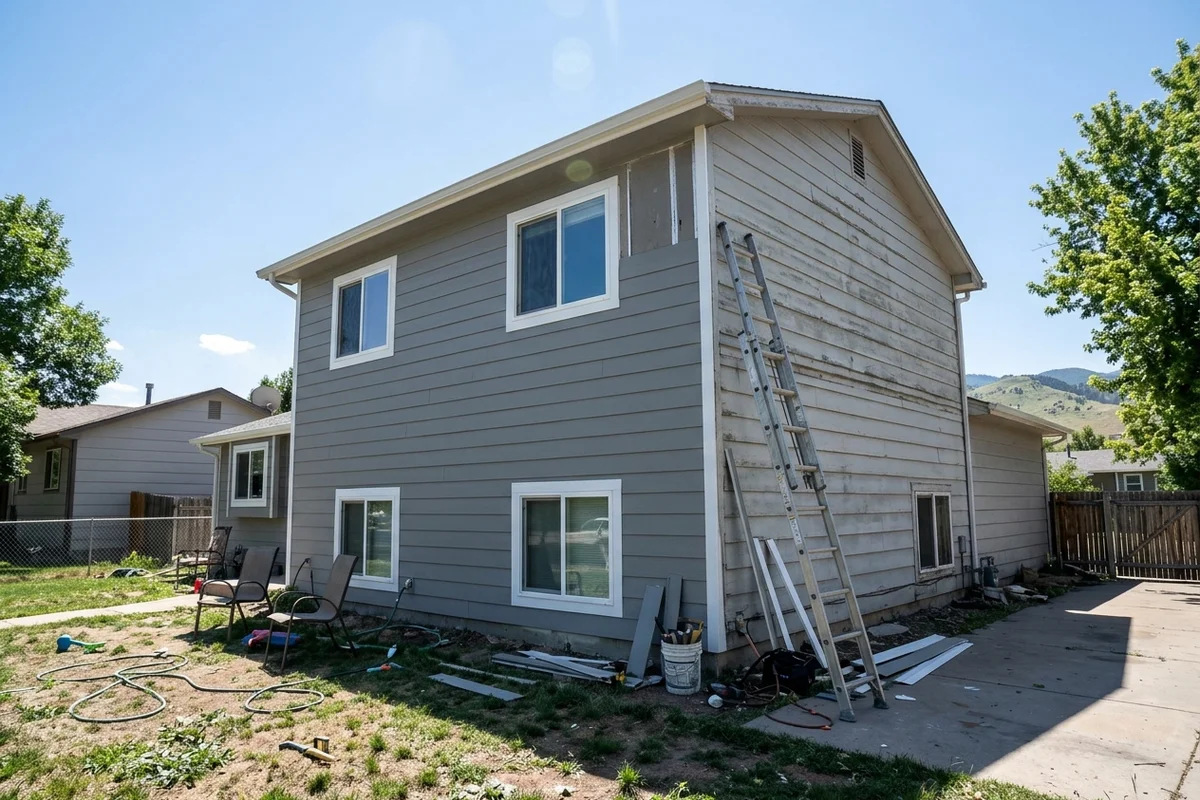
When the hail damage is spread over a few panels or boards, we replace those pieces and blend them into the sound siding. Matching is the tricky part after a storm. If your profile and color can still be found, a repair can blend in well.
If the hail covered whole walls, or a match isn’t possible, a siding replacement on those walls may be the cleaner fix. If the hail hit vinyl siding, that page covers the material itself. Smaller jobs follow the same approach as our everyday siding repair.
What to do right after the storm
- Walk around the house once it’s safe and note which walls took the hail.
- Take photos of any cracks, holes or dents, with something beside them for scale.
- Look at screens, downspouts and trim, since they show where the hail landed.
- If water could get in through a hole, cover it until the repair can be made.
- Send the estimate form with a short description of what you found.