What does siding repair involve?
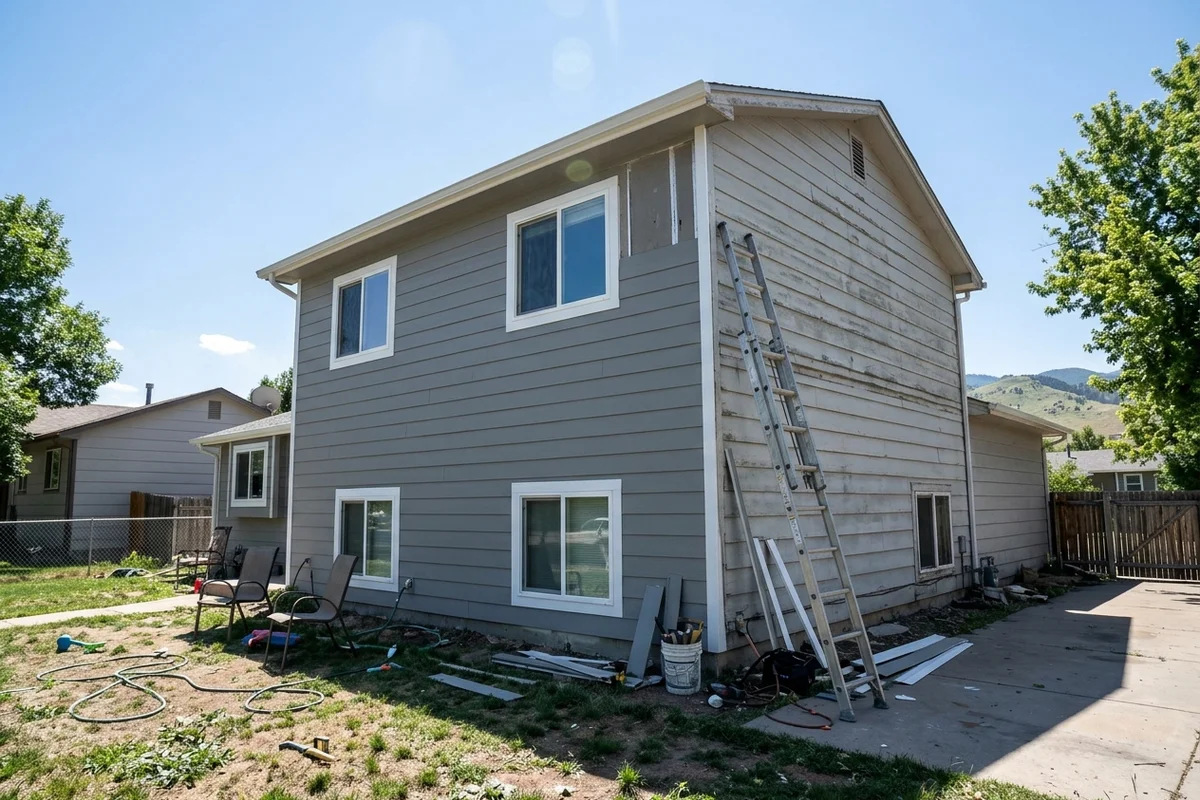
Siding repair in Fort Collins is a small, careful job. We take off the damaged pieces and nothing more.
Siding is built in layers, so it pays to look at what’s under the pieces that come off. Most walls have house wrap over sheathing, with the siding hung over the top.
If the wrap is torn or the sheathing is soft, we fix that before anything new goes on. A new board over a wet wall only hides the problem.
On lap siding, each course overlaps the one below it. The bottom edge of one piece hides the nail hem of the piece under it. So taking out one damaged board usually means:
- Loosening the course above it
- Working around corner posts and J-channel at windows and doors
- Fastening everything back in order
Done with care, the courses stay straight and the butt joints line up with the rest of the wall.
Common siding problems we fix
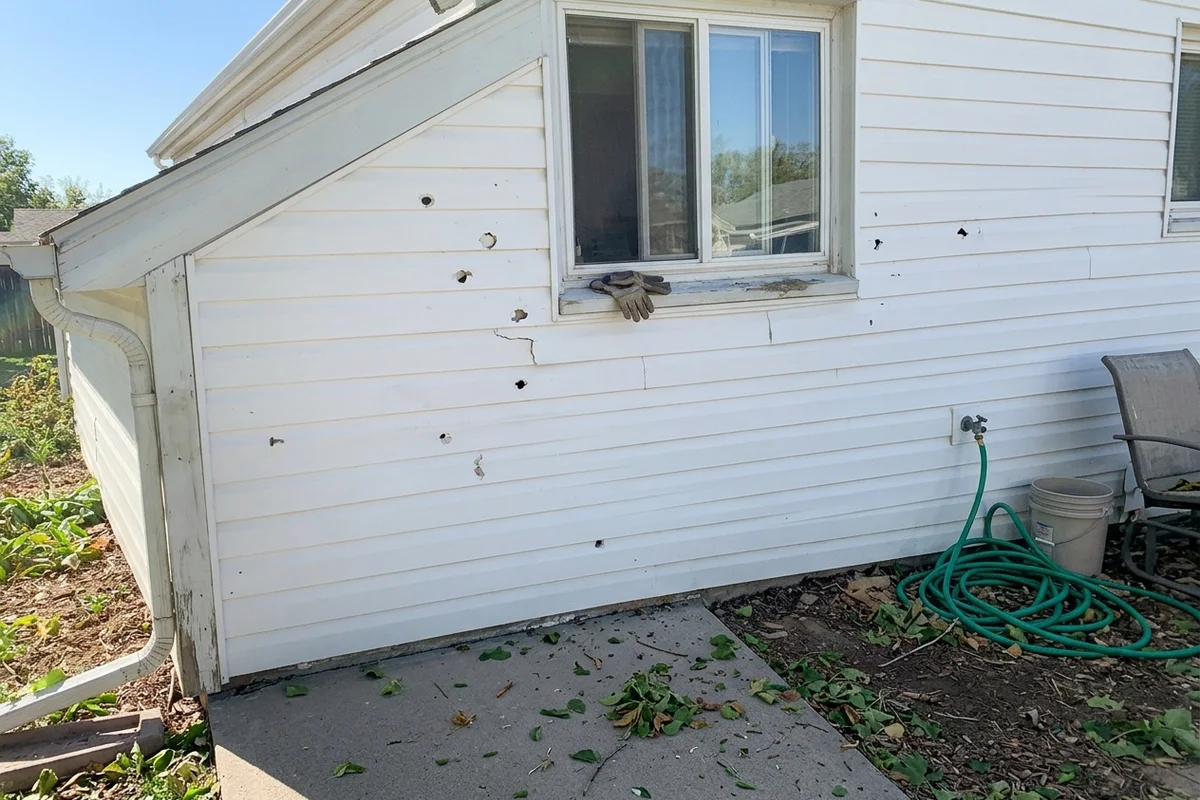
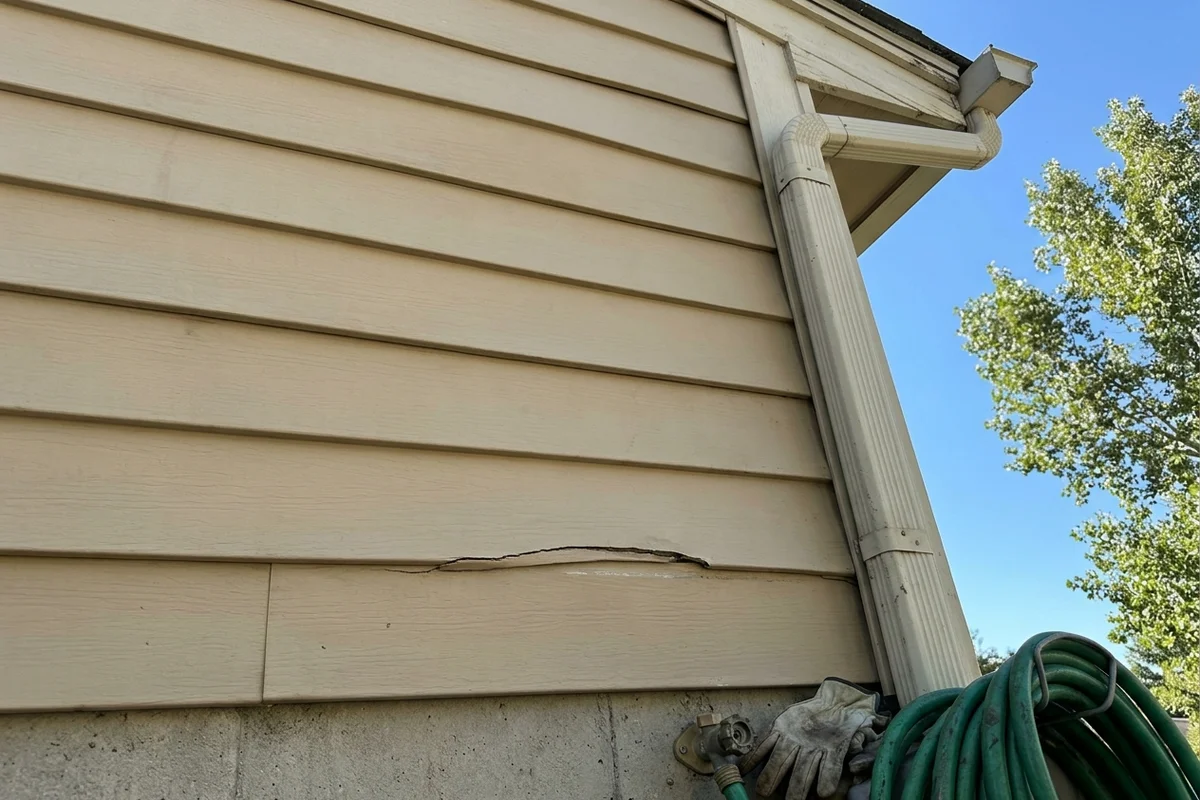
Cracked and holed panels
Vinyl gets brittle in the cold and can crack when something hits it, from hail to a stray baseball. The Front Range is one of the busiest hail corridors in the country, and a cold panel will often crack where a warm one would only dent.
Small holes and cracks let water reach the wrap. We replace the cracked panel rather than patching over it.
Loose, wavy or missing pieces
Wind can pull vinyl panels out of the lock along the bottom edge. Once a panel is loose it flaps, and the next gust can take it off the wall.
Loose panels that are still in good shape can go back in place. Bent or torn ones get replaced.
Here’s a tip: if you spot a panel flapping, tell us before the next windy day. Catching it early can keep a simple re-lock from turning into a replacement.
Dents in aluminum and metal siding
Older aluminum siding dents easily and the paint wears thin. We replace dented aluminum siding panels with matching pieces where we can find them, and paint them to blend in.
Split or soft wood boards
Painted wood lap siding splits along the grain and can go soft near the ground or under a leaky gutter. We cut out the bad section, check the sheathing, and fit a new board that is primed, caulked at the joints and painted.
Soft wood under a gutter usually points to a leak. Fixing the board without fixing the leak just sets up the same repair again.
Open seams and failed caulk
Caulk joints dry out and pull away at trim and corners. An open seam doesn’t look like much, but it is a straight path for water. We clean out the old caulk and reseal the joint.
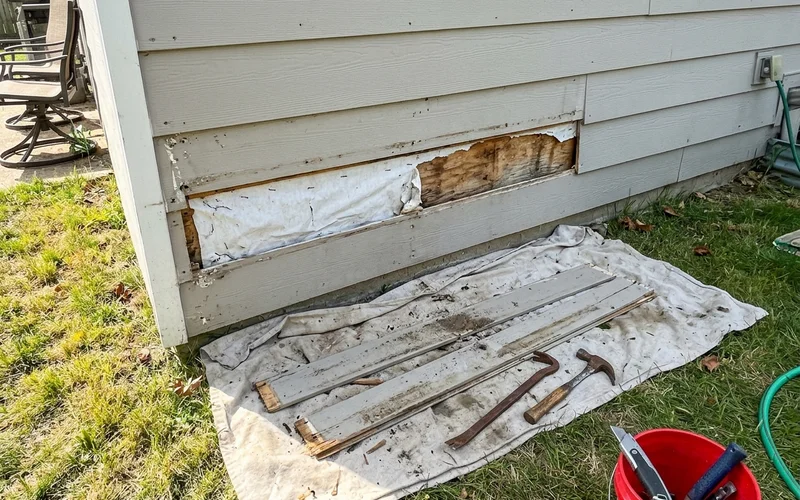
Can a repair blend in with the siding you keep?
Color matching is the hard part of any repair. Siding fades in the sun, and the south and west walls usually fade the most. A brand-new piece can look darker or brighter than the boards around it.
We match the profile first, meaning the shape and width of each course, and then the color. When a close match isn’t available, one option is to borrow a piece from a wall nobody sees, like behind a fence or deck, and put the new piece there instead. Wood and fiber cement boards can be painted to match once they’re up.
Weather matters too. Vinyl is easiest to work with above about 40°F, so a cold snap can change when we schedule the job.
| Siding type | What usually goes wrong | How we repair it |
|---|---|---|
| Vinyl | Cracks, holes, panels unlocked by wind | Unlock with a zip tool, replace the panel, lock it back in |
| Wood | Splits, soft spots, peeling paint | Cut out the board, check the sheathing, prime, caulk and paint |
| Fiber cement | Chips, cracked boards at nails or corners | Replace the board, seal the cut ends, touch up the paint |
| Older aluminum | Dents, holes, worn paint | Replace with a matching panel and paint it to blend |
When a repair grows into something bigger
Sometimes the damage runs across several walls, the profile can’t be matched, or the sheathing behind the siding has been wet for a long time. In those cases we’ll show you what we found and price a full siding replacement next to the repair, so you can see both.
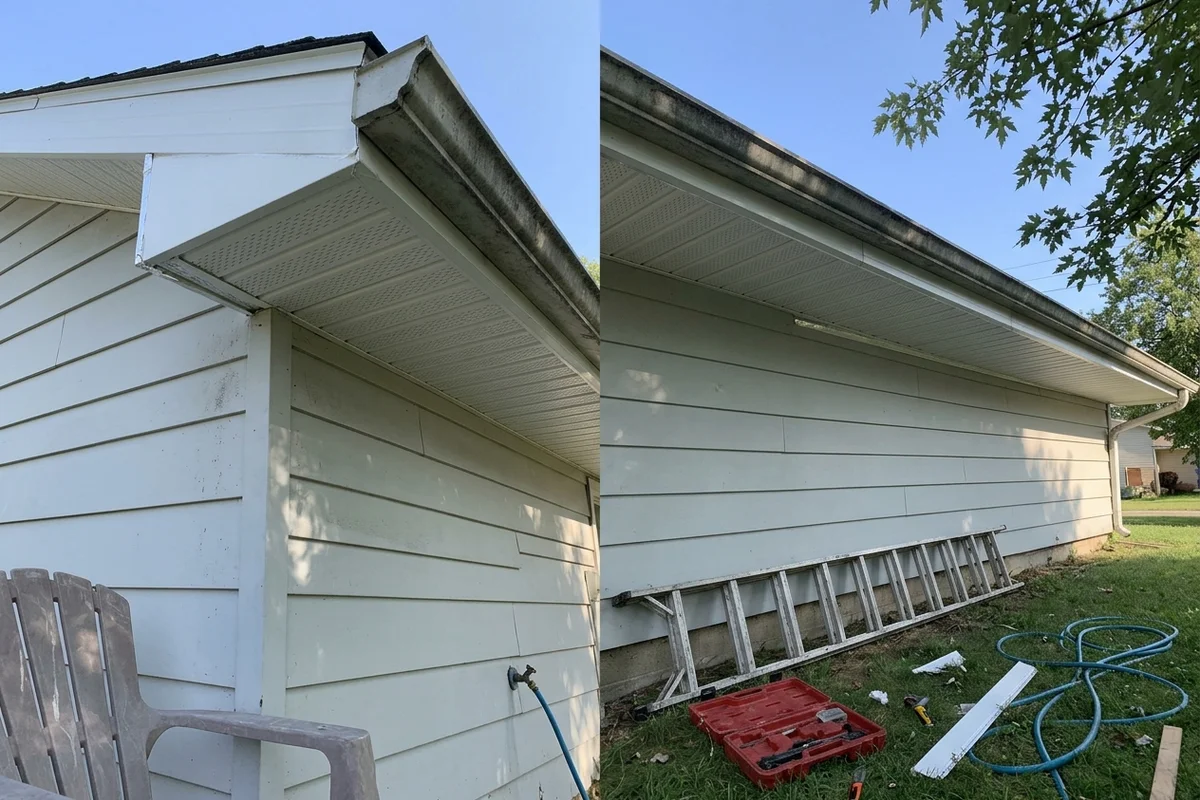
If the damage came from a storm, our hail damage siding repair page covers how we look at every wall. Trouble at the roof edge above the siding is handled by our soffit and fascia work.
One local note: the City of Fort Collins says nonstructural siding replacement can be exempt from a permit, but buildings 50 years or older still need historic review. If your home or storefront is that old, check with the city before work starts.
Not sure which way your wall leans? Send us a few photos or give us a call, and we’ll tell you whether siding repair in Fort Collins is the right size job or whether it’s time to look at more.