What are soffit and fascia?
Ever looked up at your roof edge and wondered what those boards and panels are doing? If you’re searching for soffit and fascia repair in Fort Collins, a quick tour of the parts will help.
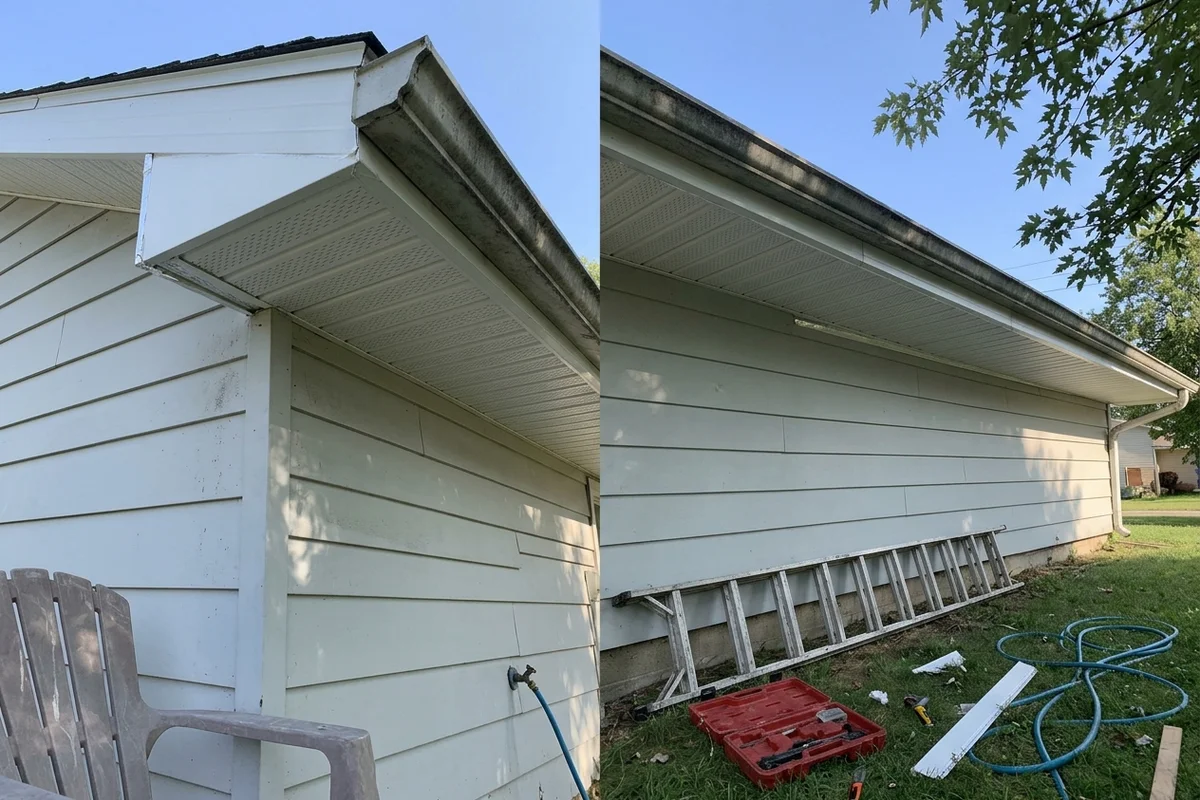
Here’s how the roof edge goes together:
- Fascia: the board that runs along the edge of the roof, across the ends of the rafter tails. Your gutter hangs on it.
- Drip edge: the metal strip from the roof that laps over the top of the fascia.
- Soffit: the underside of the overhang, between the fascia and the wall of the house.
Together they close up the roof edge so weather and animals stay out.
Soffit has a second job, too. Many roofs pull fresh air into the attic through vented soffit panels and let it out higher up. The International Residential Code calls for 1 square foot of vent area for every 150 square feet of attic floor. It allows 1 to 300 when intake and exhaust are balanced.
That’s why blocked or covered soffit vents matter. The attic can’t breathe as well, and it stays damp longer.
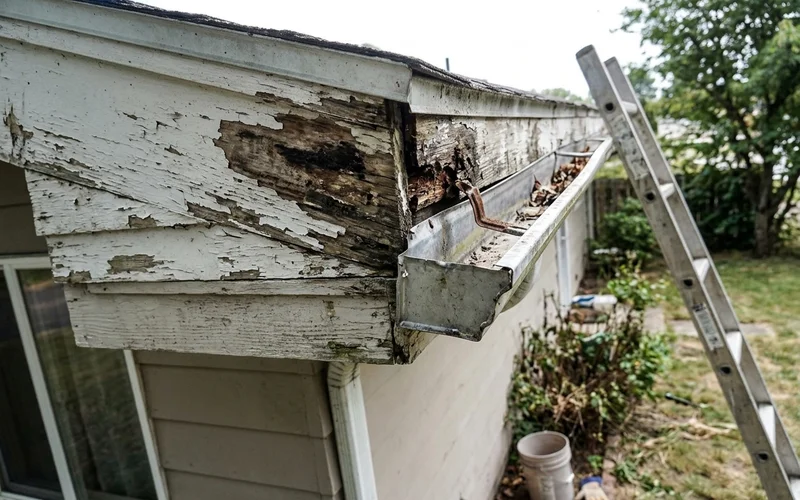
Fascia repair and replacement
When gutters overflow or leak behind the board, the fascia stays wet and starts to rot. Paint peels, the wood goes soft, and the gutter can start to pull away. Many homeowners spot the sagging gutter first and never suspect the board behind it.
Here’s how we handle it:
- Take off the gutter where needed.
- Remove the rotted fascia.
- Check the rafter tails behind it.
- Repair any soft rafter ends before the new board goes on.
New fascia can be painted wood, or wood covered with an aluminum fascia wrap that is bent to fit the board. The drip edge goes back over the top, so water from the roof drops into the gutter instead of running down behind it.
Soffit repair and replacement
Soffit panels sag when the channels holding them come loose. They also gap at corners and where the overhang meets the wall. Those gaps let birds, insects and other animals into the attic.
We refasten panels that are still in good shape. The ones that are bent, cracked or stained get replaced.
Vented soffit goes where the attic needs air. Solid soffit goes where it doesn’t, such as over a porch ceiling. Panels sit in F-channel along the wall, so the soffit and the siding below meet cleanly.
Here’s a quick look at what we see most and how we fix it:
| Part | Common trouble | What we do |
|---|---|---|
| Fascia board | Rot from gutter overflow, peeling paint | Replace the board, check rafter tails, paint or wrap |
| Vented soffit | Gaps, sagging, blocked vents | Refasten or replace, keep vents open |
| Solid soffit | Water stains, loose panels | Replace stained panels, refasten the rest |
| Drip edge | Missing or bent at the roof edge | Reset so water drops into the gutter |
How soffit and fascia tie into your siding
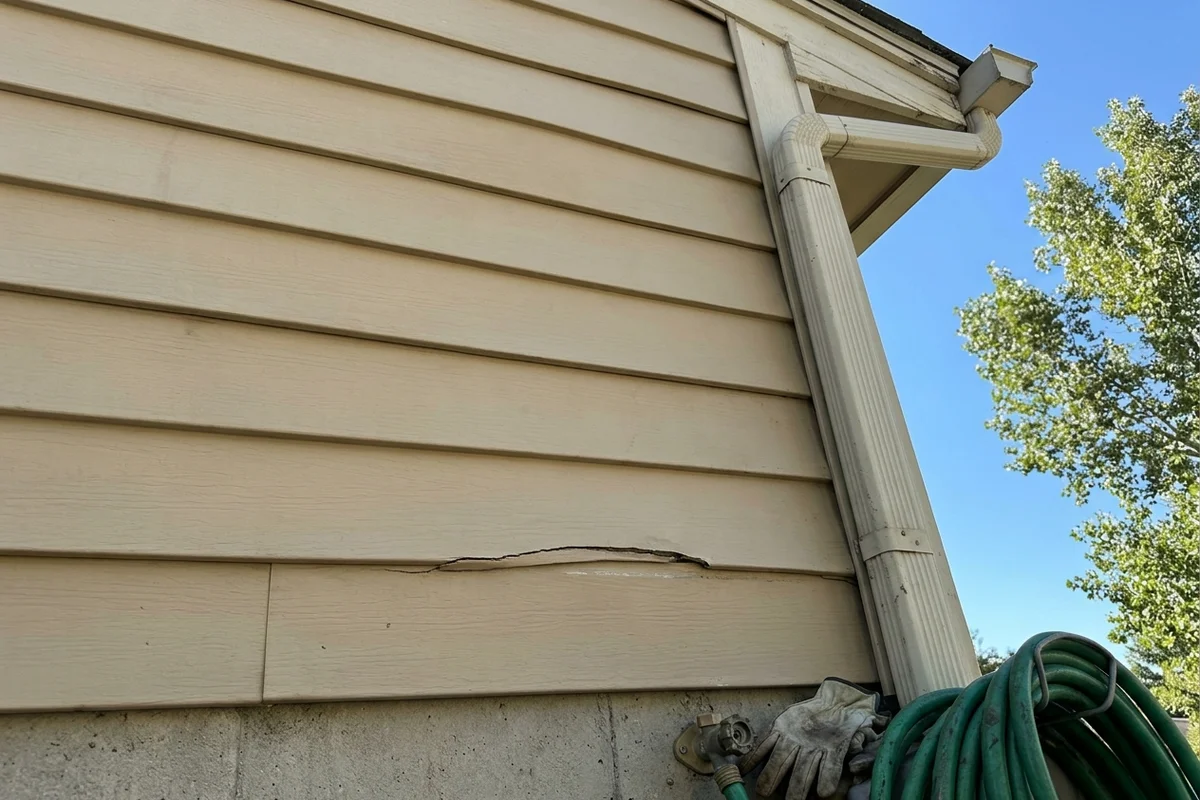
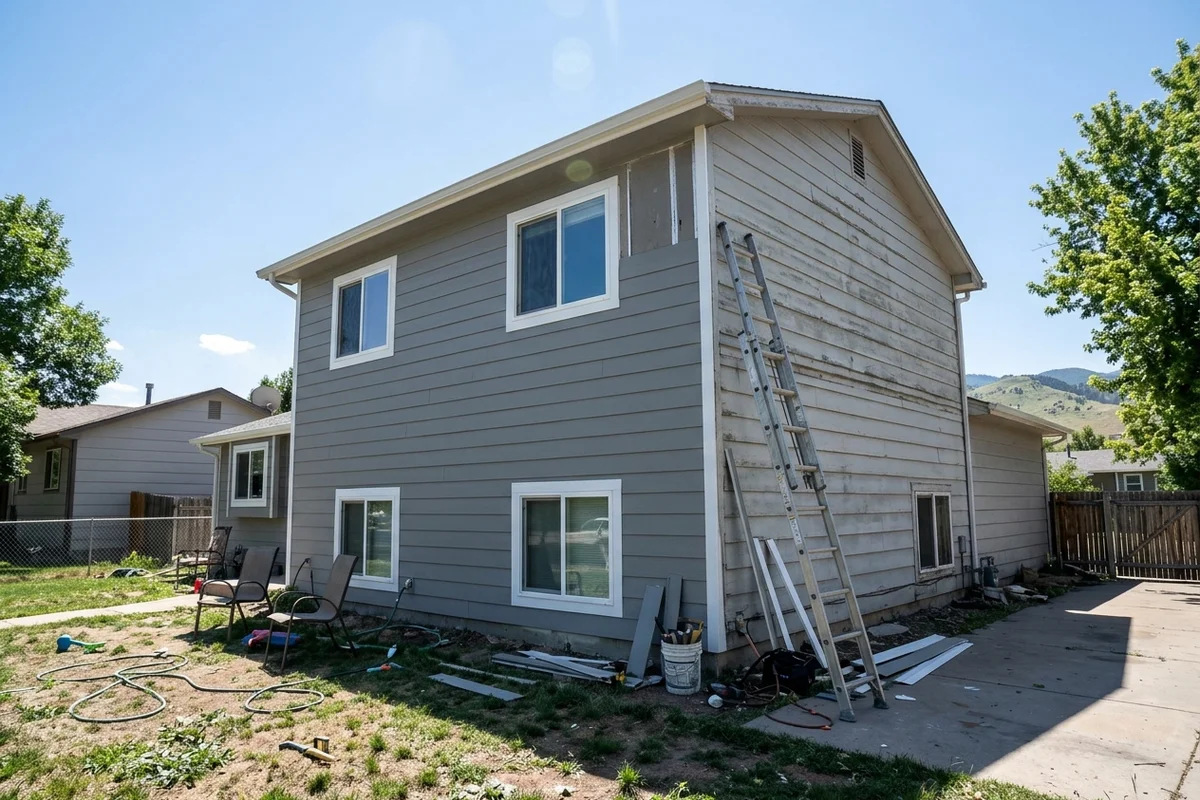
The roof edge and the siding meet at the top of the wall. If the fascia rots or the soffit gaps, water and pests can reach the top course of siding and the wall behind it. That’s why we finish soffit and fascia work with a clean tie-in to the siding below.
Your next step depends on what you’re seeing:
- Top courses of siding damaged too: our siding repair work covers them.
- Replacing all your siding: on a full siding replacement, soffit and fascia can be redone at the same time.
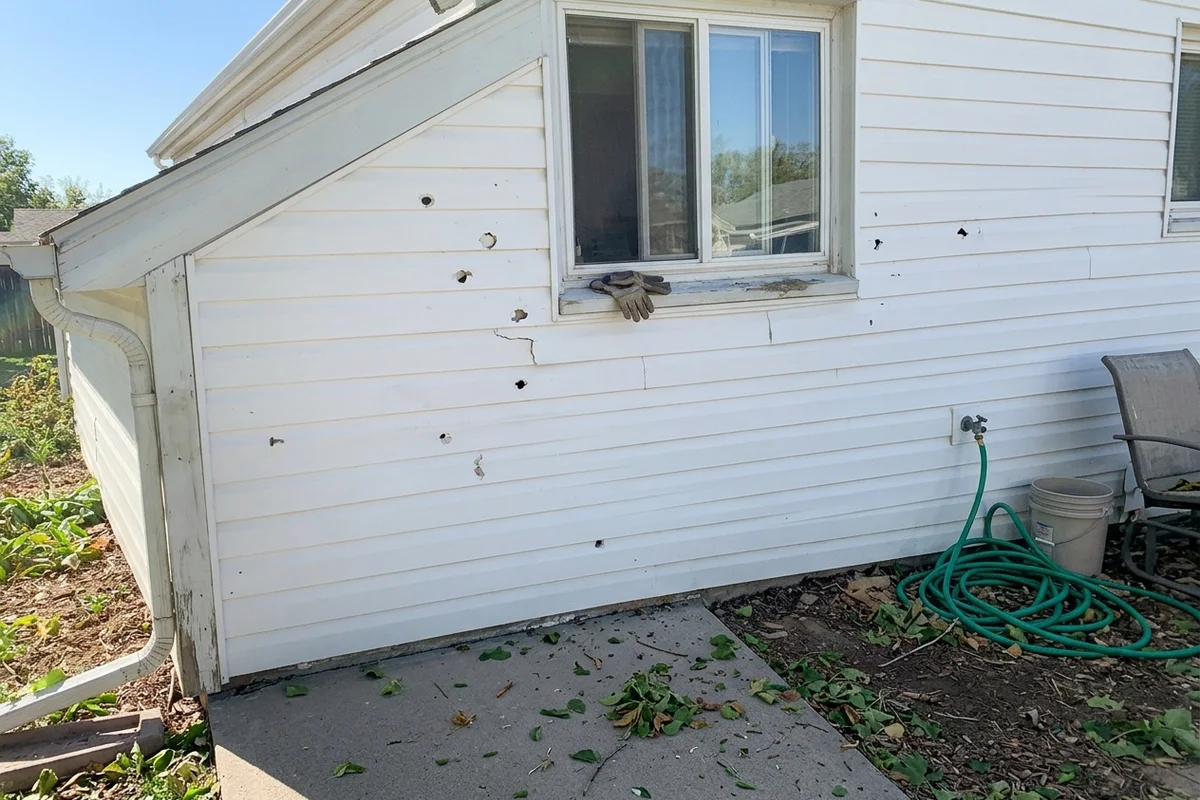
- Dented fascia wrap or cracked soffit panels after a storm: see hail damage siding repair. Northern Colorado sits in what’s often called Hail Alley, so this is common here.
Not sure which one applies to your home or business? Send us a few photos of the roof edge, and we’ll help you sort it out.