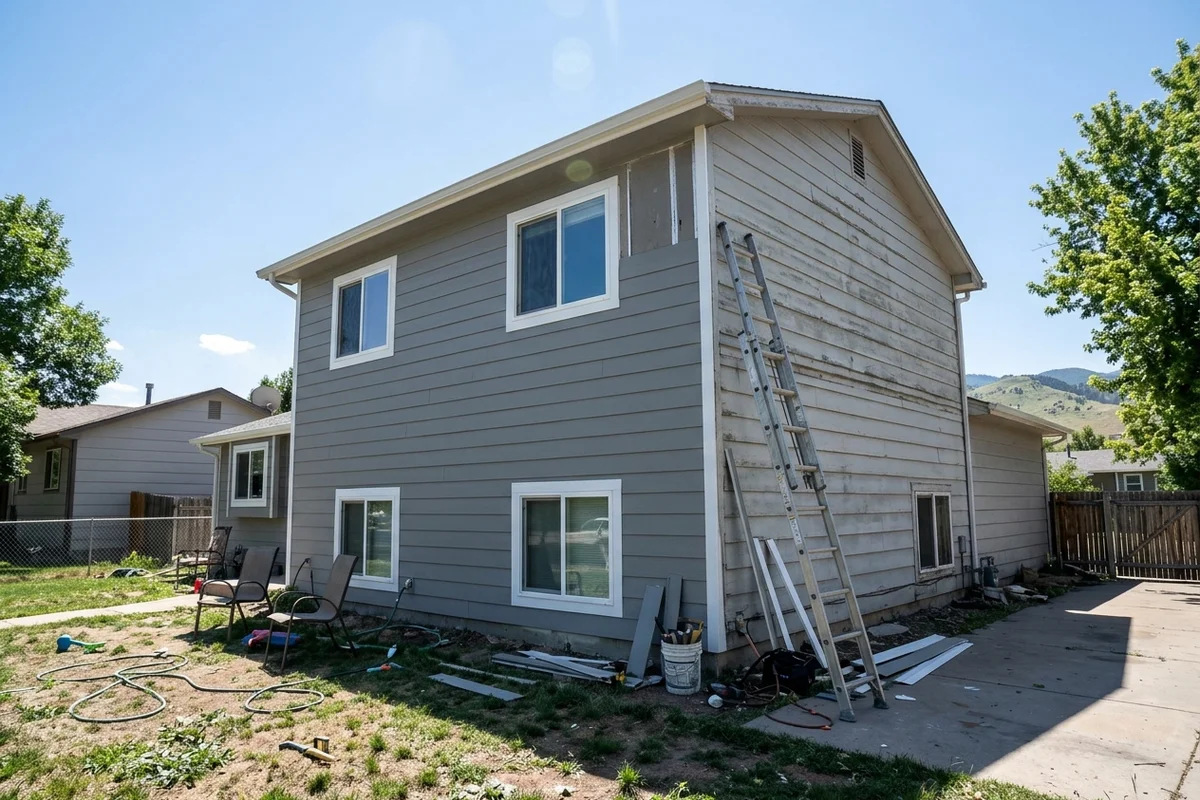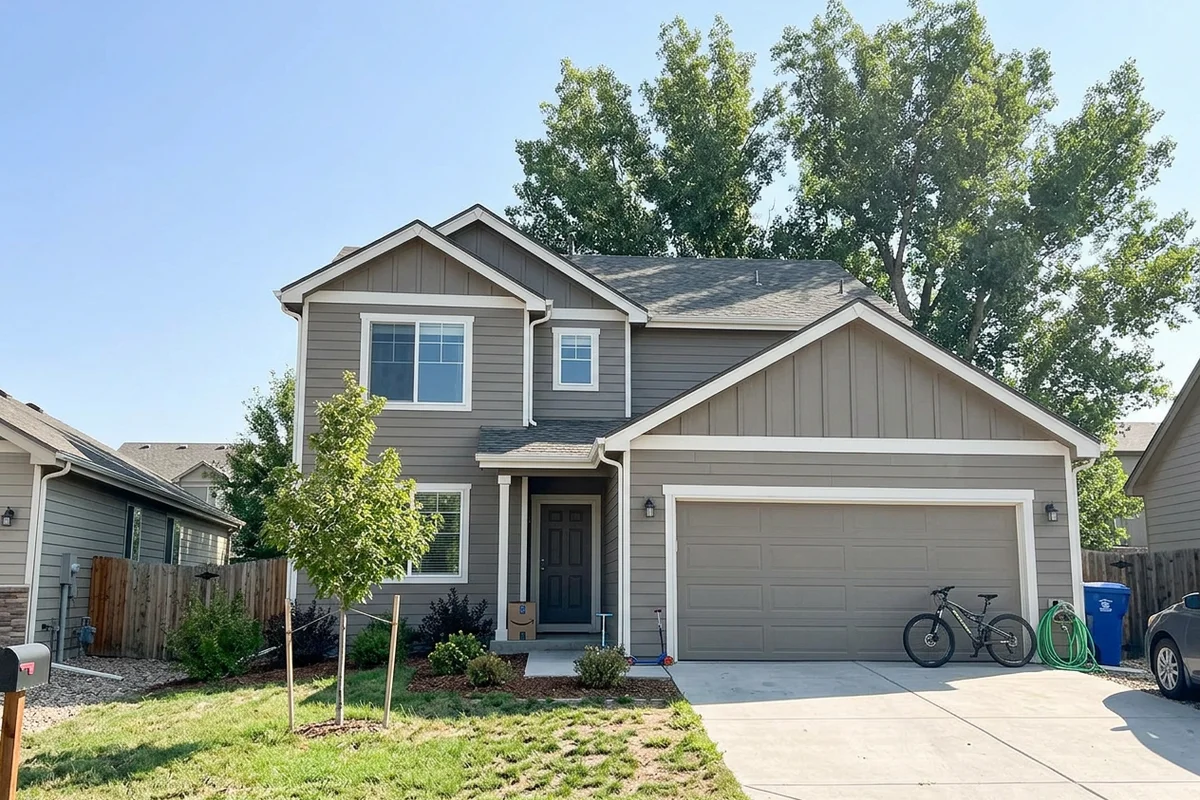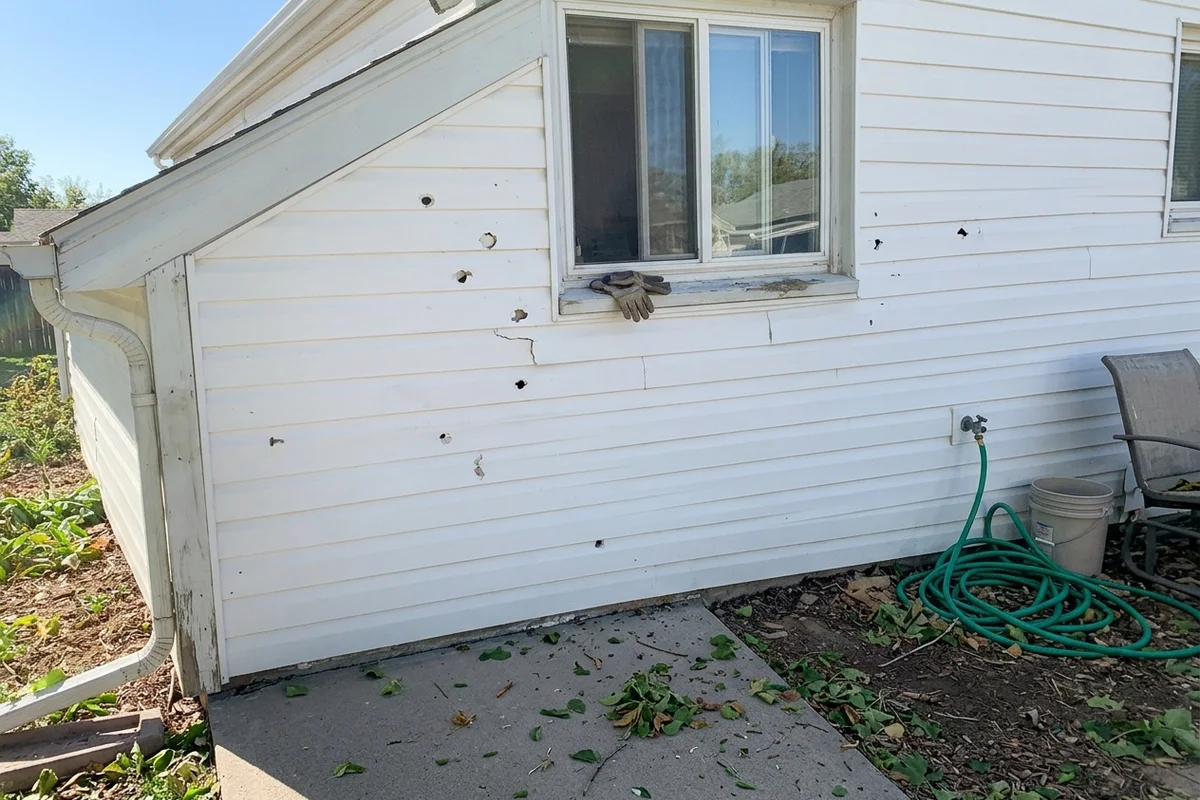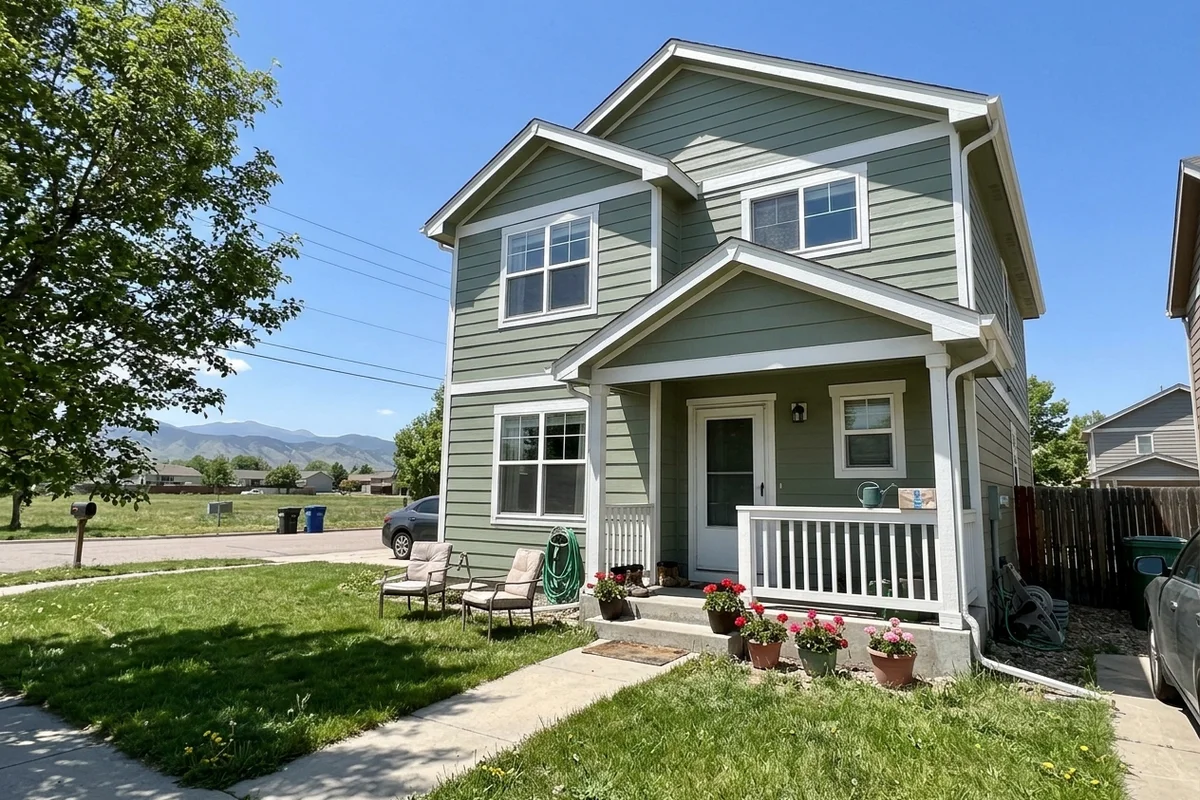
What is fiber cement siding?
Ever searched for siding and run into Hardie board, Hardie plank and James Hardie siding all at once? Those are all one maker’s names for the same material: fiber cement.
Here’s the quick version of what fiber cement siding in Fort Collins really is. It’s a board made from cement, sand and wood fiber, pressed and cured into lap boards, panels and shingles.
It’s heavy and stiff, so long runs of lap siding stay straight on the wall. That’s a big reason we like it.
On this page we just call it fiber cement, because the material is what matters.
Which fiber cement styles do we install?
Lap siding
Lap siding is the classic look: long horizontal boards, each one overlapping the board below it. Fiber cement lap boards come smooth or with a wood-grain face.
They also come in different exposures, which is how much of each board shows. A narrower exposure gives you more lines on the wall, and a wider one gives a cleaner, bolder look.
Vertical panel and board and batten
Vertical panels go up in large sheets. Add battens over the seams and you get a board-and-batten look that suits farmhouse and modern styles.
They work well on gables and bump-outs, where a change in direction adds interest without a lot of fuss.
Shingle siding
Fiber cement shingles come in straight or staggered edges. Most people use them on a gable, a dormer or a porch wall to set it apart from the lap siding below.
Factory-finished or painted?
You can get fiber cement factory-finished, with the color put on before it ships. You can also get it primed and paint it after it goes up.
Factory-finished boards go up already colored. We touch up the cut ends and nail heads with matching paint. Primed boards give you any color you want, and the whole wall gets painted once the siding is on.
| Finish | How it’s done | Good to know |
|---|---|---|
| Factory-finished | Color applied before install | Touch-up paint on cuts and nails; color choices are set by what’s made |
| Primed and painted | Painted after it’s on the wall | Any color you like; painted boards need repainting over time |
Warranty terms can tip the decision. James Hardie covers its siding with a 30-year non-prorated limited warranty, and its factory-applied ColorPlus finish carries a 15-year warranty. Ask us for the current paperwork on the exact product you’re considering, since terms vary by line.
How fiber cement goes on the wall
Good fiber cement work is in the details you won’t see once it’s done. Here’s what we do on every wall:
- Wrap the wall first. Water-resistive barrier goes on before any board.
- Blind nail the lap boards. Each nail is hidden by the board above it.
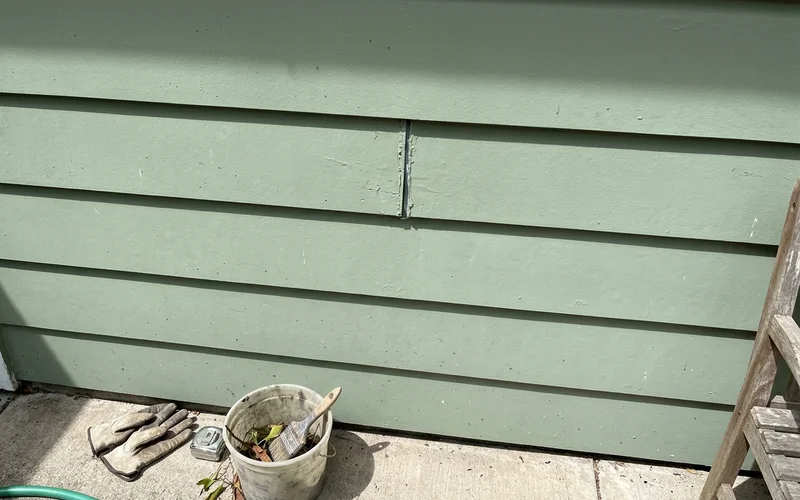
- Flash every butt joint. That’s where two boards meet end to end.
- Seal the cut ends. Raw edges soak up water if you skip this.
- Leave clearance. Boards stop short of the roof and the ground so they don’t sit in water. James Hardie’s installation instructions call for about 6 inches above the ground.
- Frame it with trim. Trim boards go around windows, doors and corners.
Those details matter here because Fort Collins freezes at night and thaws by afternoon for a good part of the year. Water that gets into an unsealed cut end or an open joint can freeze and open it further.
Cutting fiber cement makes fine silica dust. OSHA’s 2016 silica rule set a limit of 50 micrograms per cubic meter of air over an eight-hour shift, and it lists vacuum dust collection on a handheld saw as an approved way to stay under it when cutting outdoors.
We cut with dust control and clean up the work area, so the dust doesn’t end up in your yard or your neighbor’s.
Where fiber cement fits
Fiber cement is a common choice on a full siding replacement. If you’re weighing a lighter wood-based board, see our engineered wood siding page.
Northern Colorado sits in what NOAA calls Hail Alley, with peak hail season running May through July. Chipped fiber cement after a storm is handled through our hail damage siding repair work.
Ready to talk through fiber cement siding in Fort Collins for your home or building? Reach out and we’ll look at your walls, go over styles and finishes with you, and give you a straight answer on what makes sense.