What kinds of wood siding do we install?
Looking at cedar siding in Fort Collins and wondering which style fits your place? We install four kinds of wood siding, and each one gives a wall a very different feel. Here’s how they compare.
Cedar lap siding
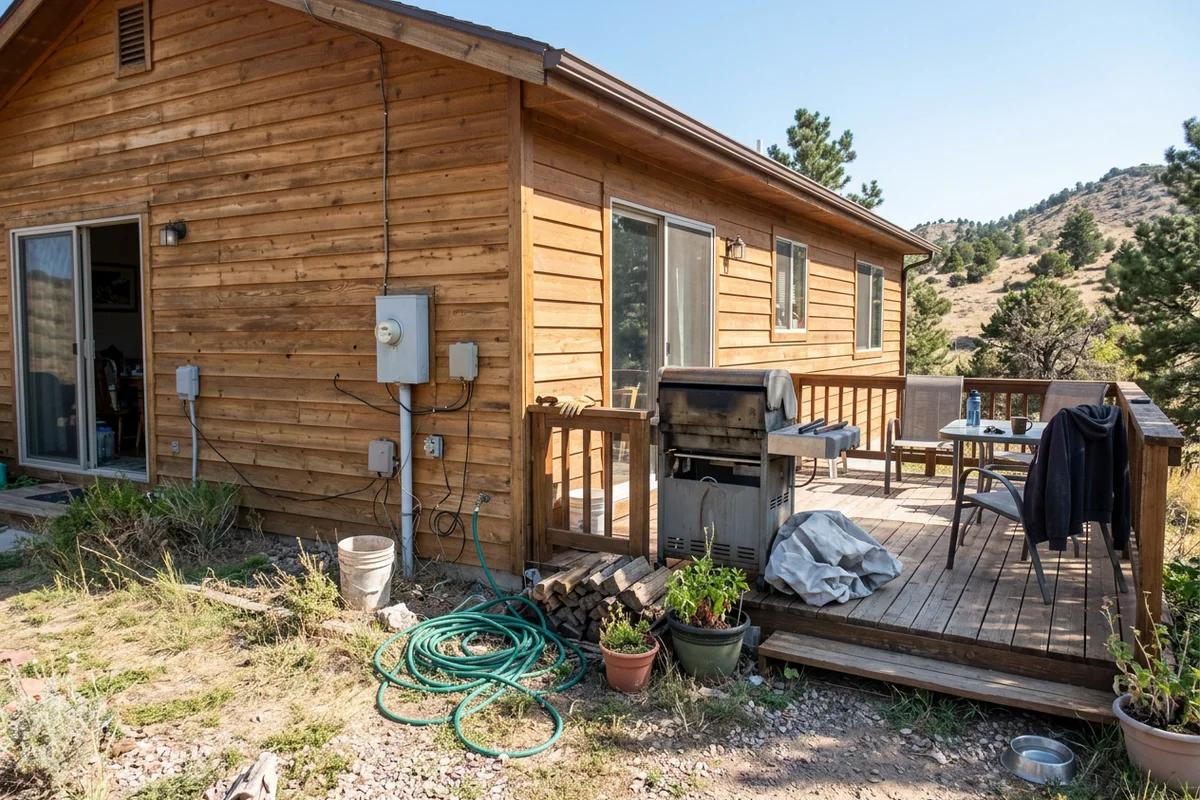
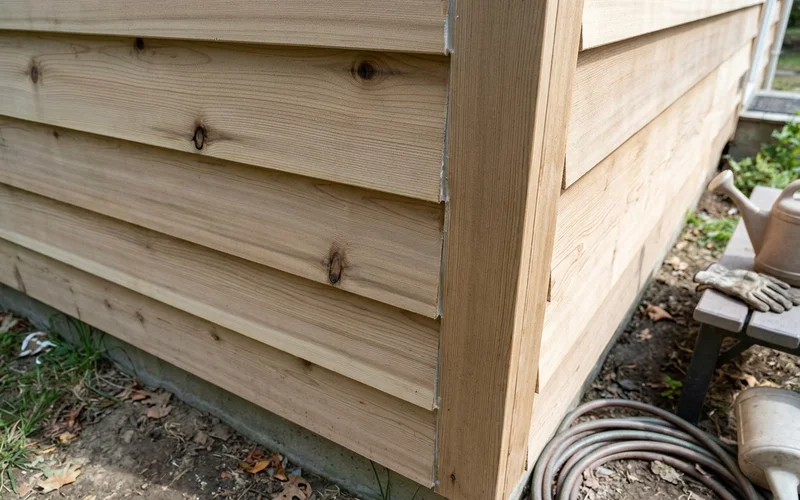
Cedar lap siding, also called bevel siding, is cut thicker at the bottom than the top. Each board overlaps the one below it and casts a shadow line along the wall.
Cedar is light, so it’s easy on the wall and easy to handle. It holds stain well, and it takes paint too.
Cedar shingles
Cedar shingles go up in overlapping courses, much like a roof. They suit gables, dormers, and whole walls on cottage and shingle-style houses.
Left unstained, they weather to a soft gray over time. Plenty of owners love that look, and others stain them to keep the warm color.
Log siding
Log siding has a rounded face that gives a wall the look of stacked logs. It’s thick and heavy, so corners, windows, and doors need careful fitting.
That fitting is where a rushed job shows. Gaps at those spots are the first places water finds.
Tongue and groove boards
Tongue and groove boards lock edge to edge. They’re often run vertically on porch walls, gables, and accents, and they’re usually painted.
Stain or paint?
Wood can be stained or painted. Semi-transparent stain soaks into the wood and lets the grain show through. Solid stain covers the grain like paint but still lets the texture show.
Paint gives a full color coat on smooth or rough boards. Here’s a quick side-by-side:
| Finish | What it looks like | What to know |
|---|---|---|
| Semi-transparent stain | Grain and color variation show through | Needs refreshing more often in strong sun |
| Solid stain | Even color with the wood texture showing | Covers knots and color differences between boards |
| Paint | Full, even color | Cedar needs a stain-blocking primer first |
Why cedar needs the right primer
Cedar has natural oils called tannins. Without the right primer under paint, tannin bleed can show up as brown streaks on light colors.
Oil-based primers have a long track record of blocking that bleed on red woods like western red cedar. Newer acrylic primers have improved, but cedar can still need two coats. Ask us which one we’d use on your boards.
Back-priming helps too. That means sealing the back of each board before it goes up, which helps the boards stay flat and take finish evenly.
Caring for wood siding here
Colorado sun is strong, and the freeze-thaw swings are hard on a finish. Wood needs that finish kept up, and its ends and gaps sealed.
Fort Collins freezes at night and thaws by afternoon for a good part of the year. Water that gets behind a cracked board or into an open seam can freeze and open it further. We’re also in what locals call Hail Alley, so a finish that’s already thin has less to give when a storm rolls through.
Two habits keep water out of the places it goes first:
- Seal end grain on every cut. Raw ends soak up water fastest.
- Caulk where boards meet trim. Small gaps turn into big repairs.
- Walk the house once or twice a year. Look for cracks, loose boards, and open joints before the cold sets in.
A well-kept cedar wall can last decades here. A little attention each year is what gets it there.
Repairing wood siding
One of the best things about real wood is that it can be fixed one board at a time. We cut out a split or soft board and check the sheathing behind it. Then we prime, fit, and finish a new board to match.
Our siding repair page covers smaller repairs like this. If you want a wood look in a board made from wood strands and resin, see engineered wood siding.
Full re-sides in wood are done as part of a siding replacement, with the old siding off and the wall wrapped first. If you’re weighing cedar siding in Fort Collins for your home or business, reach out. We’ll look at your walls and talk through what makes sense.